Case 02 · 2024
Fleet Command Center
Monitoring effort dropped 28% and critical response improved 45%.
 Overview
01 / The challenge
Stop forcing dispatchers to monitor a fleet across seven separate apps when every second of an incident counts.
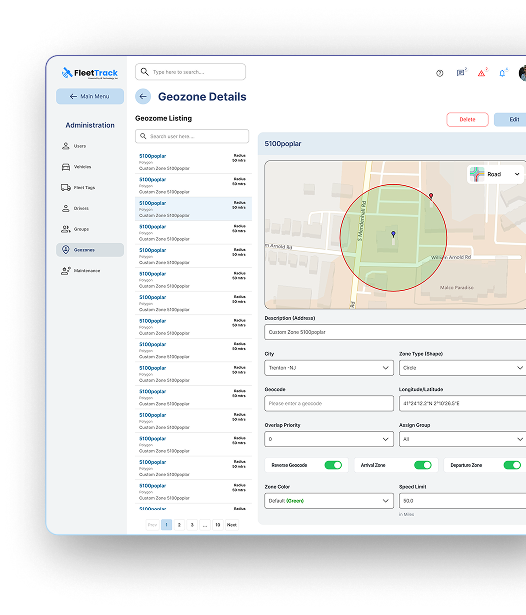
I consolidated maps, cameras, alerts, routes, and maintenance into one multi-tenant command center for fleets of 500+ vehicles.
-28%
Monitoring effort
+45%
Incident response
07+
Modules unified
02 / Screens & moments
03 / How I worked
The approach.
Model operations
Mapped the incident lifecycle, operator roles, tenant boundaries, and seven legacy module inventories.
Design for triage
Created risk tiers and contextual workspaces that grouped related alerts, camera evidence, and vehicle state.
Stress-test density
Validated high-density tables, maps, and tiled layouts against peak operational scenarios.
What was broken
- Dispatchers continuously switched between maps, cameras, compliance, and alert tools.
- High-volume notifications obscured critical safety events.
- Tenant, vehicle, and driver context was repeatedly lost between modules.
What I aimed for
- Create a single operating picture for each fleet.
- Prioritize anomalies by risk and required response.
- Keep map, video, route, and telematics evidence in context.
04 / Results
What moved.
Reduced manual monitoring effort by 28%.
Improved critical incident response time by 45%.
Consolidated seven legacy modules into one consistent operating model.
Next case study